Women at the wheel in the Nilgiris

by Priti David

Original Source: https://ruralindiaonline.org/en/articles/women-at-the-wheel-in-the-nilgiris/

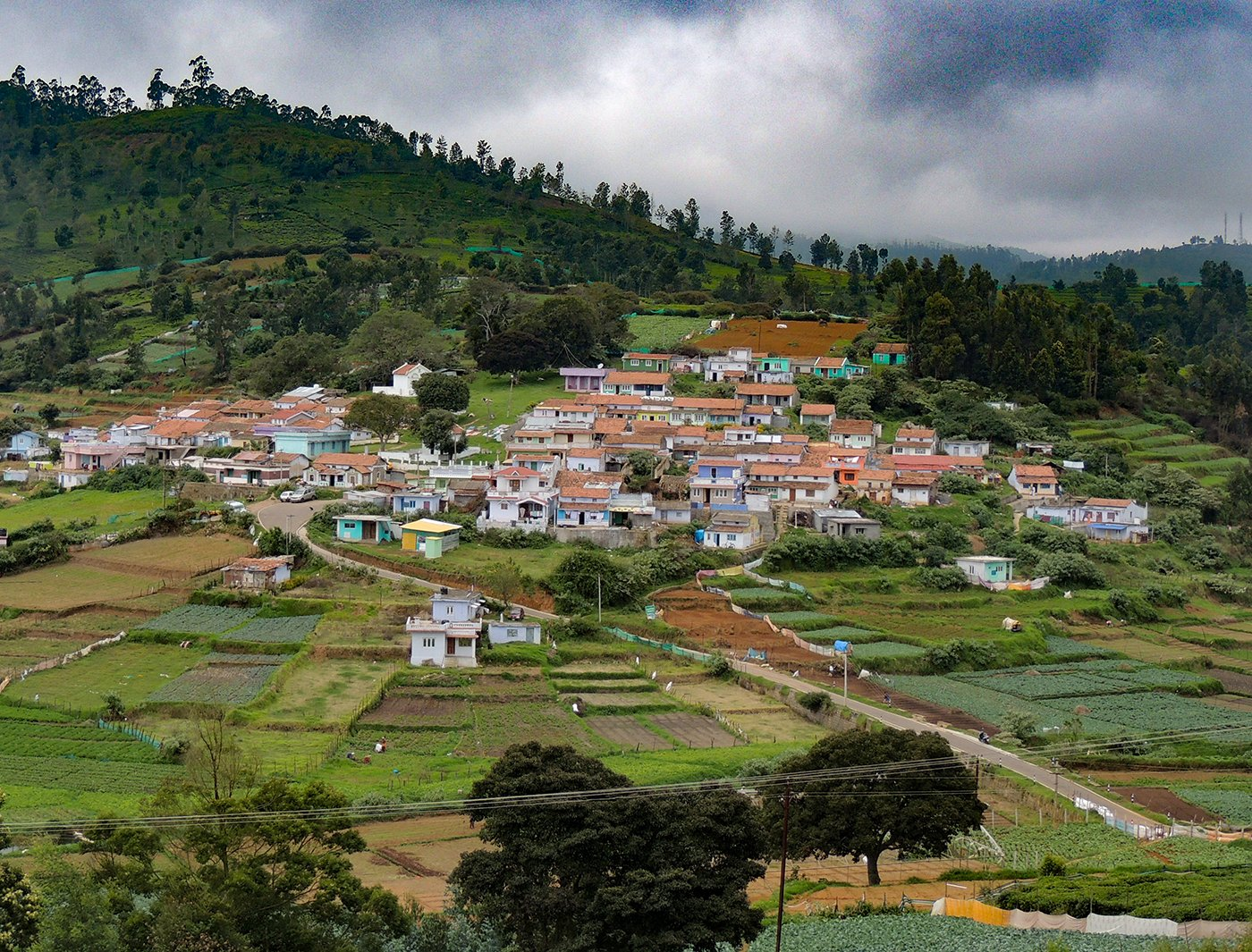
“You can purchase everything in a shop today. But clay pots used in religious rituals by our tribal communities can only be made by us women potters of the Kota tribe,” says Sugi Radhakrishnan. She is 63, and from a long line of women potters in Thiruchigadi, a tribal hamlet, which she refers to as ‘Tirchkaad’ – the Kota people have slightly different names for their settlements. The hamlet is in Udhagamandalam taluk, near Kotagiri town in Tamil Nadu’s Nilgiri district.

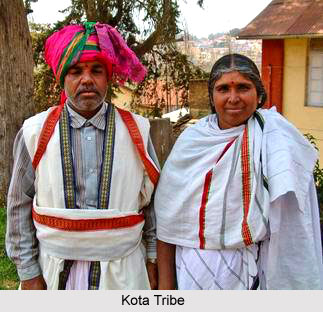
At home, Sugi is usually dressed in the signature attire of Kota women – a thick white sheet tied like a toga called dupitt in the Kota language, and a white shawl called varaad . While working in Kotagiri and other towns, the women and men from Thiruchigadi don’t always wear the traditional clothes that they do wear when back in the hamlet. Sugi’s oiled hair is twisted into a horizontal hanging bun in a style unique to the women of her tribe. She welcomes us into her small pottery room adjacent to her home.

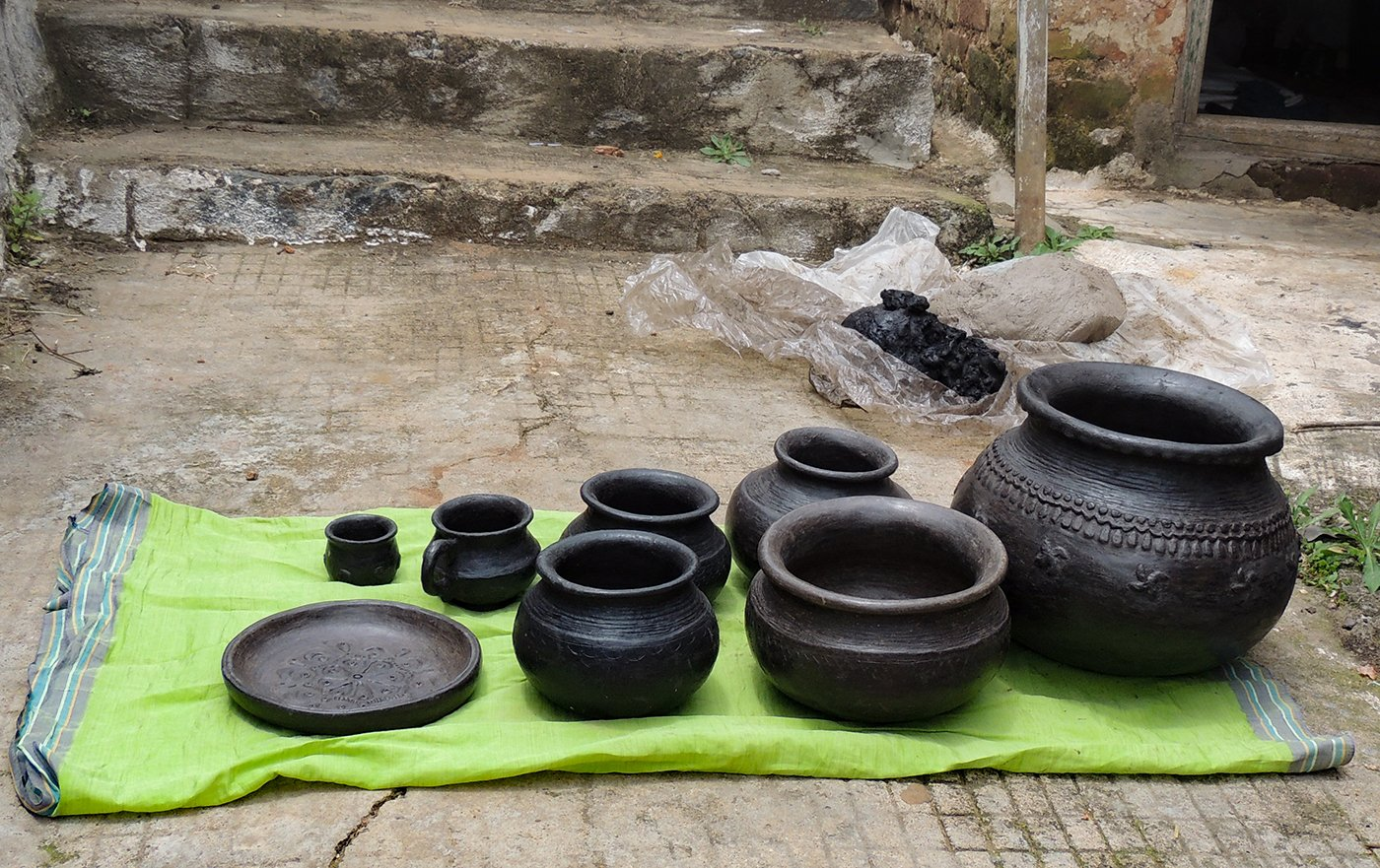
“There was no formal ‘teaching’ of how to make a pot. I watched my grandmothers’ hands, the way they moved. Shaping the cylindrical pot into a circular one requires hours of smoothening with a wooden paddle on the outside, while simultaneously rubbing with a smooth round stone from inside. This also decreases porosity, and the stone and paddle must move in harmony so as not to develop stress cracks. Such a pot cooks the most flavourful rice. And we use the smaller-mouthed ones for sambhar . It’s very tasty, you should try it.”
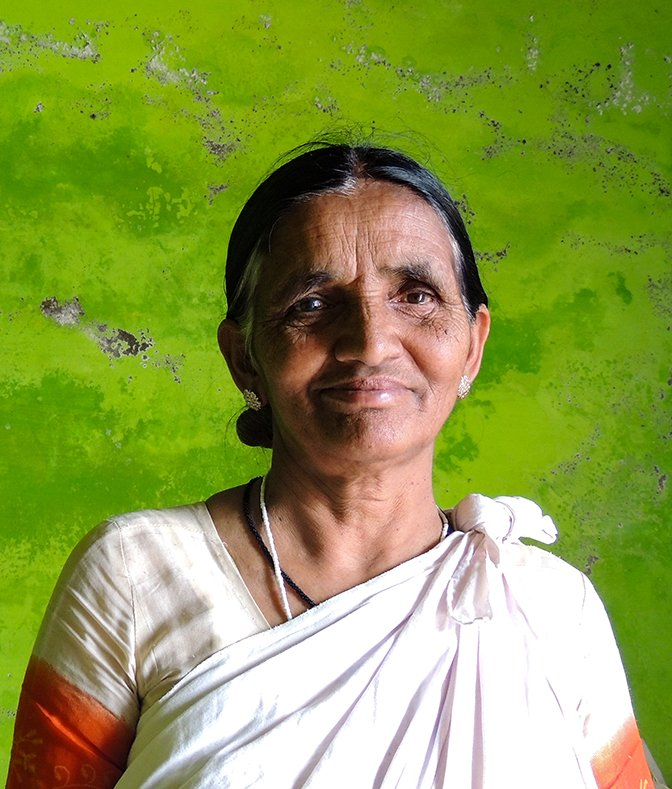
Sugi Radhakrishnan, 63, who comes from a long line of female potters in Thiruchigadi, says she learned the art by observing her grandmothers

In the Nilgiri mountains of southern India, only women of the Kota tribe have been engaged in the craft of pottery.  Their numbers are small – the Census (2011) says there are just 308 Kota left in 102 households in the Nilgiris district. This though is contested by the community elders, who say they number nearly 3,000 (and they have appealed to the district collector for a proper survey).

From the ceremonial extraction of the clay at grounds close to the settlements, to the moulding and shaping, planing and firing, it has been women at the wheel. The men usually do no more than fashion the wheel. In the past, women made pots not only for religious purposes, but also for daily eating, cooking, storage of water and grains, for clay oil lamps and pipes. Before stainless steel and plastic came up from the plains, the only pots used in these hills were clay ones made by the Kota.

In a country where pottery is mostly a male domain, this is unusual. There are very few other documented lines of women potters.  The Madras District Gazeteer , 1908, in a section on ‘The Nilgiris’, says of the Kota: “… they now act as musicians and artisans to the other hill people, the men being goldsmiths, blacksmiths, carpenters, leather workers and so forth, and the women making pots on a kind of potters wheel.”

“Only our ladies can make pots,” confirms community elder Mangali Shanmugham, 65, a retired Bank of India manager who has moved back to the Kota hamlet of Puddu Kotagiri. “If there is no potter in our village, we must call a lady from another village to help us.”

Pottery and religion are intertwined in Kota culture. Clay extraction begins with the 50-day annual festival dedicated to their deity Kamtraaya and his spouse Ayanoor. Sugi made about 100 pots during last year’s festival. “It begins on the first Monday after amavasya (no-moon night) in December/January,” she says. “The head priest and his wife lead the procession to the sacred site for clay. Musicians play a special tune called ‘M ann et kod’ [Take the clay’ ] on the kolle [flute], the tappit and dobbar [drums], and a kobb [bugle], as first the karpmann [black clay] and then the avaarmann [grey clay] are extracted. No outsiders are allowed. The next four months are spent in making pots – the winter sun and air help them dry quickly.”
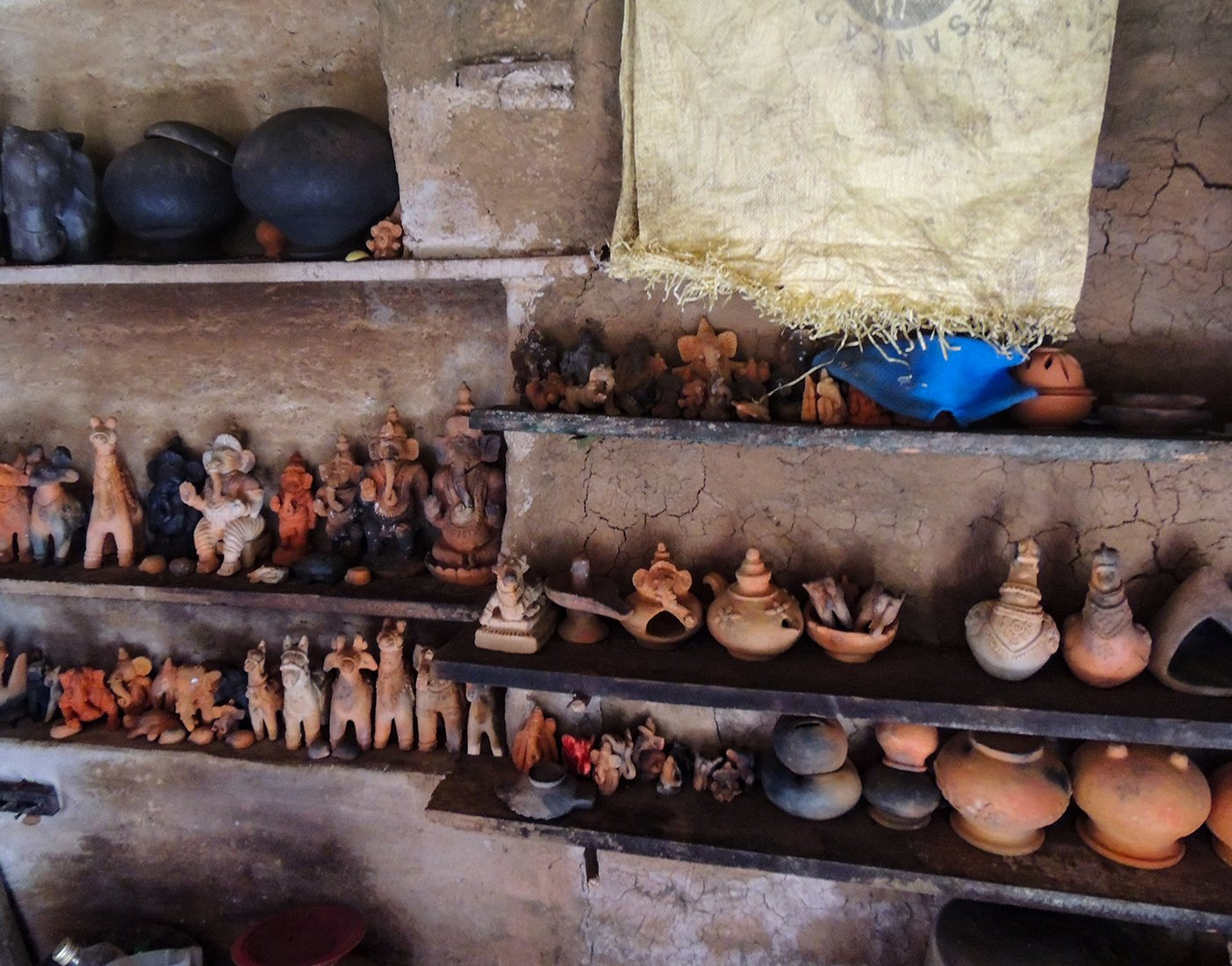
In the winter, women make hundreds of pots – they extract clay , mould, shape and fire them – while men do no more than fashion their wheels

It is these spiritual links that have kept the craft of pottery alive in Kota settlements, despite the changing times. “Today, young children in our community travel very far to attend English-medium schools. Where is the time for them to watch or learn such things? However, once a year for the festival, all the women in the village must sit together and do it,” says Sugi. This then is also a time for the girls to learn the craft.

A few non-profit organisations working in Kotagari are trying to help revive the Kota clay works. The Nilgiris Adivasi Welfare Association managed to sell about Rs. 40,000 worth of clay artefacts made by Kota women in 2016-2017. They believe this can be bettered if the government funds a clay-mixing machine for each of the seven Kota settlements here. A mixing machine, Sugi says, will indeed help to handle the tightly compacted clay. But, she adds, “We can only work from December to March. The clay doesn’t dry well the rest of the year. A machine can’t change that.”

Reviving Kota pottery has not been easy, says Snehlata Nath, director, Keystone Foundation, Kotagiri, which works with Adivasis on eco-development. “We had expected more interest in the community in taking their craft forward. However, the women want it to remain for ritual purposes. I think it would be good to rejuvenate this craft with the younger generation of women. It can also be modernised by glazing, as we had attempted, and made into modern utility products.”

Sugi, who lives with her husband, their son and his family, says she can sell a pot for Rs. 100 to Rs. 250 to the Keystone Foundation, and organisations which market it, like TRIFED (Tribal Cooperative Marketing Development Federation of India). Some time ago, along with three other women who helped, she made 200 pots for sale and shared the earnings. But the bulk of the income of her family and that of others in the hamlet comes from farming, and from the jobs they do in Kotagiri and other towns.

The question of whether an essentially spiritually-rooted craft should be commercialised or ‘modernised’ for the economic benefit of the Kota is complex, of course. “It was never a business,” says Shanmugham. “But if someone [from another tribe] requested a pot, we made it for them and they would give us some grain in exchange. And the exchange price varied depending upon the needs of the buyer and seller.”

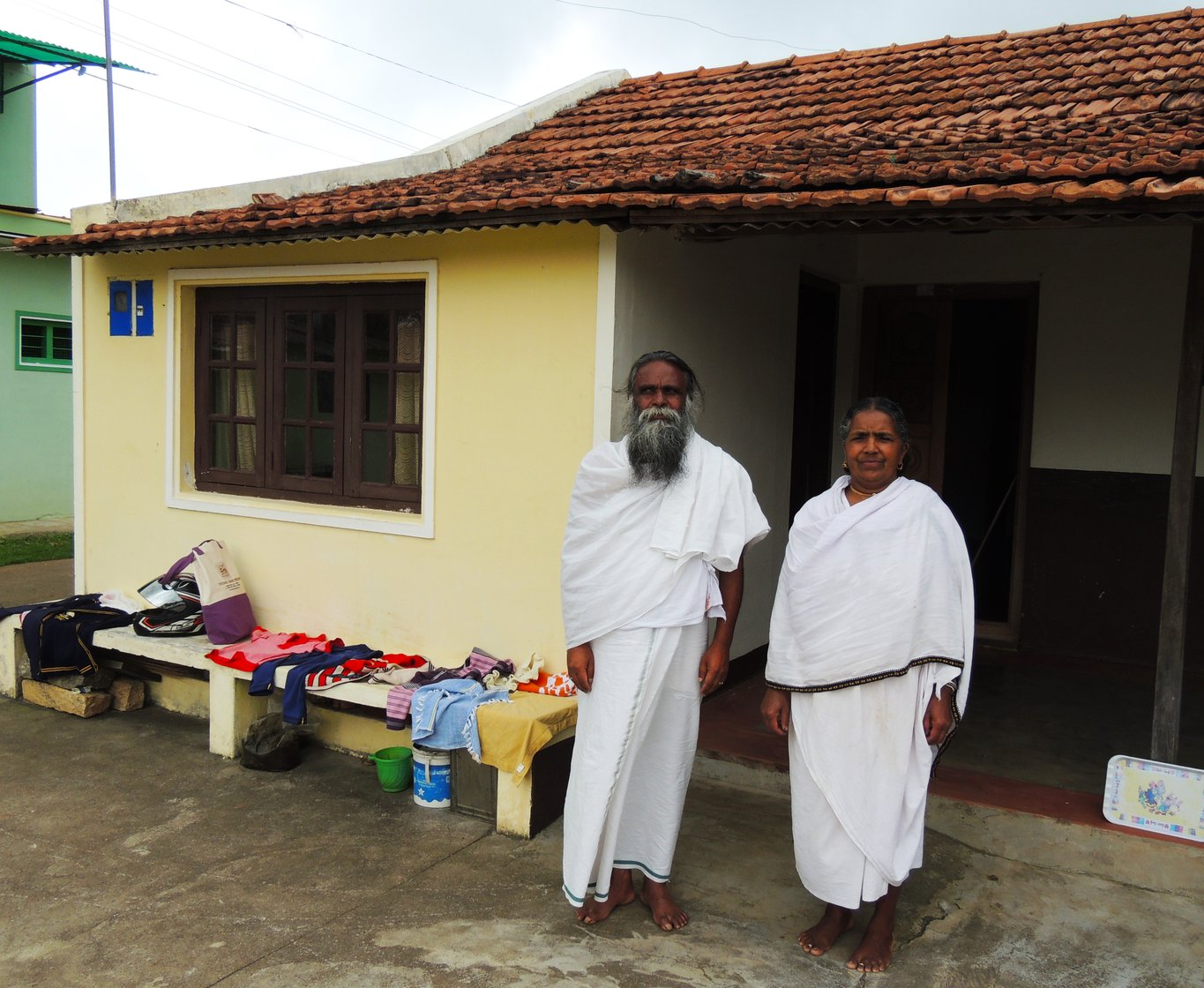
ommunity elders Mangali Shanmugham (left) and Raju Lakshmanaa (right) emphasise the ritual dimension of making pots but also see pottery’s potential economic worth

For Sugi, the ritual importance is supreme. Yet, the additional income comes in handy. As Shanmugham puts it, “The ritual side is non-negotiable. The other side is simple economics. If they can get a substantial amount every month from the sale of pottery products, our ladies will be happy to make the extra income. Today, any extra income is welcome.”

Other members of the community agree. Pujari Raju Lakshmanaa, who worked as deputy manager with the State Bank of India for 28 years before a spiritual calling saw him return to Puddu Kotagiri, says, “Commercial or not, we don’t bother. Kota tribals have always fulfilled their own needs without anybody’s support. We need clay pots for our rituals and we will continue to make them for that purpose. The rest is not important.”

The author wishes to thank N. Selvi and Parmanathan Aravindh of Keystone Foundation, and B. K. Pushpakumar of NAWA for help with the translation.
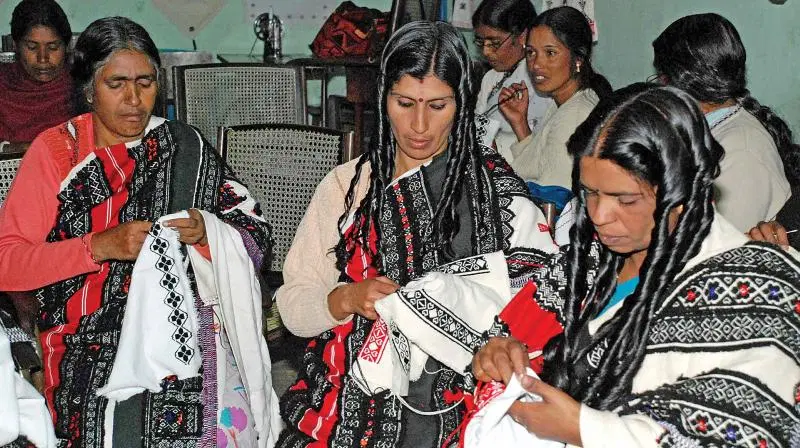
Toda and Kota dialects will survive: Tribal leaders

Deccan Chronicle| B Ravichandran

Both the Toda and Kota tribes are one of the primitive tribes in the country and native to the Nilgiris.

Toda tribeswomen busy doing their traditional embroidery works.

OOTY: While the Toda and Kota dialects of the Nilgiris tribes are now considered as endangered and heading towards extinction as per the report of the census directorate amid just few thousand people speaking them now, tribal leaders believe that their dialect will survive.  Both the Toda and Kota tribes are one of the primitive tribes in the country and native to the Nilgiris. Stating that the population of Kota tribes who live in about seven settlements in the Nilgiris, is about 2,500 to 3,000 now, Ms. Neej Saraswathi, district secretary of the Tamil Nadu Primitive Tribes Association, said that no one could explain why the Kota population was low and yet nearly stable all these centuries.

“From time immemorial the Kota tribes have been living in the Nilgiris.  Their population was less than 2,000 about two decades ago.  Now, it has shown a good increase,” she pointed out. She said that the pressures of the modern world have not affected the dialect of the ‘Kotas’. However small their population is, the dialect rules the everyday life of the ‘Kotas’ and it will thrive though it lacks a script, she said.

Mr. K.M.Alwas, secretary of the Nilgiris Adivasi Welfare Association (NAWA) who is also a prominent Toda tribal leader, said that the population of the Toda tribes has increased to around 1,500 now from below thousand in the past.  “No one knows what happened in the past to check population growth.  It could be health and other reasons that played havoc with the population of the Toda tribes. Though now-a-days Toda children study in English medium schools, the ‘Toda’ dialect rules the roost in family and community affairs of the Todas.  The dialect has survived the test of time and will continue to thrive,” he asserted.

Original Source: https://www.deccanchronicle.com/nation/in-other-news/200218/toda-and-kota-dialects-will-survive-tribal-leaders.html

Kota tribe of the Nilgiris celebrate Aiyanoor Ammanoor festival

Original Source: https://www.thehindu.com/news/national/tamil-nadu/watch-kota-tribe-of-the-nilgiris-celebrate-aiyanoor-ammanoor-festival/article66355893.ece

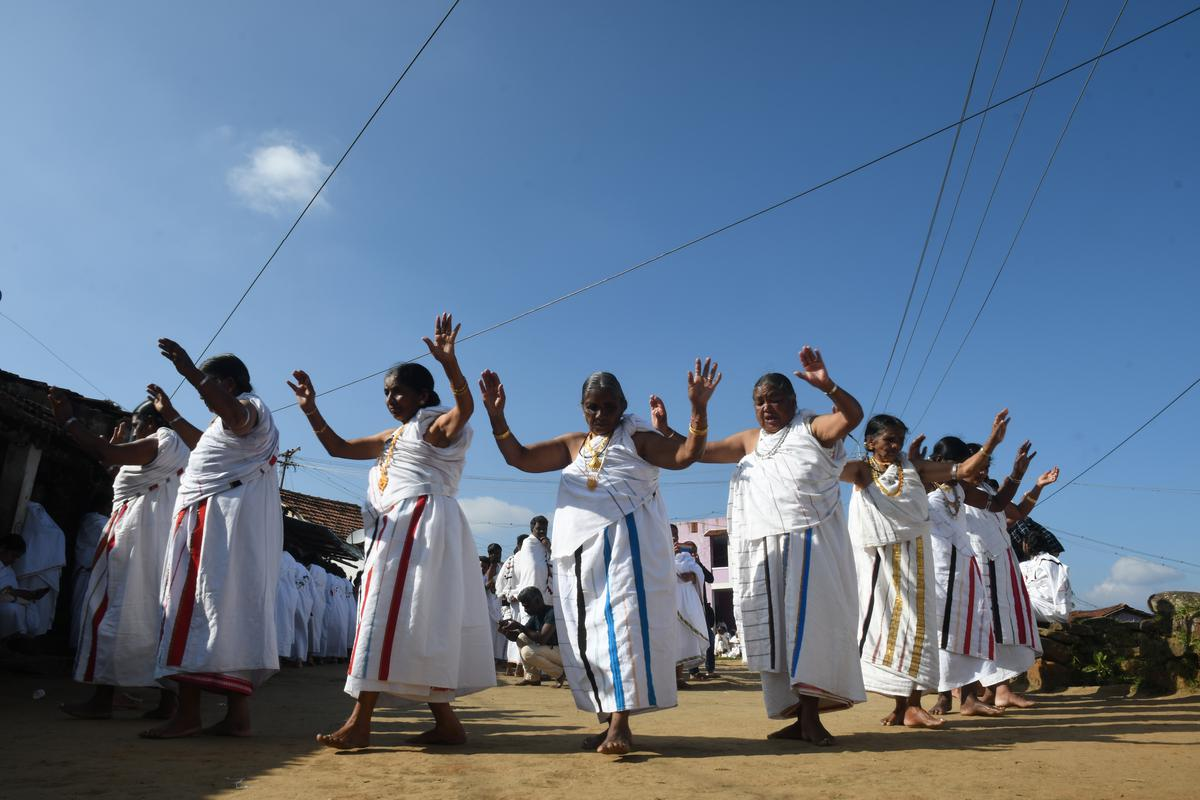
This is the “Aiyanoor Ammanoor”, a week-long festival celebrated by the Kota tribe of the Nilgiris. 

The Aiyanoor Ammanoor festival started on December 23 in Kokkal village. The villagers go and collect mud to make mud pots. Once the mud pots are made, they open their temple. They then cook in the mud pots and serve food for the whole village. 

After prayers are over in the temple, the men and women dance separately during the day and night wearing their traditional clothes. The festival ends with this dance. 

The pot-making ceremony is held once in two years.

Reporting, pictures and videos: M. Sathyamoorthy

Production: Shibu Narayan 

Kota Tribe

Kota Tribes of Tamil Nadu are adept in various art works and have close affinity with the Toda tribes.

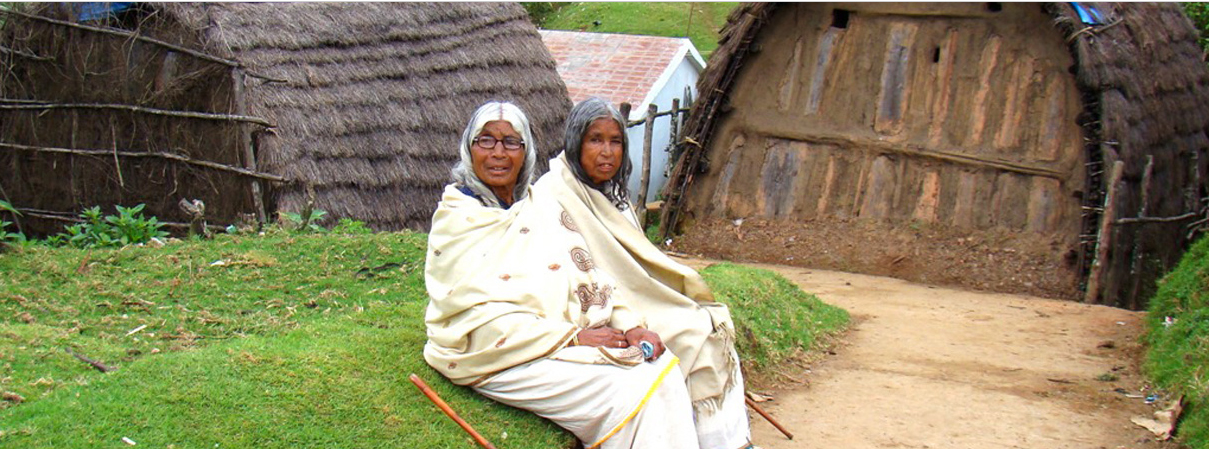
Kota tribes of Tamil Nadu are believed to have moved to the Nilgiris Hills after the Toda tribe. They had earlier been living in Karnataka in a mountain known as Kollimalai in Mysore after which they named the first village “Kollimalai” (near Ketti village) which they built in the Nilgiris. The Kota Village consists of a row of few thatched huts. The Kota houses called ‘pai’ were traditionally thatched huts, with mud and brick walls. The houses of the Kotas have a unique linear pattern with two or three localities called Keri with two or three streets which form the integral pan of the village. Each village had three exogamous clans of similar name. Each clan settled in a street called Keri. Kotagiri is the traditional home for the “Kotas”. “Kota – Giri” means “Mountain of the Kotas.” The name comes from Kotar-Keri, the street of the Kotas. Kota is the name derives from the word ‘Ko’ means the cow and it believed that their ancestor where living in cows and thus the place they survive called Kokkal, the resting place of cows.

Language of Kota Tribe
The Kota tribal language known as “Ko-v Ma-nt” is a very old and rude dialect of Kannada language and is closely related to Toda Language. The Kota tribal population is about 2500. The origin of the name “Kota” is derived from the Dravidian root word “Ko” meaning Mountain. The Kota village is known as Kokkal in the Kota Language. The pattern of settlement is believed to have been determined by a black cow who led the Kotas through the Nilgiris and with its hoof, indicating where to found each village. This footprint acts as a moral center of gravity, an important place for music making, dancing, and other rituals.

Dress of Kota Tribe
Kota traditional garment is known as “varad,” a white bedspread cloth, is thrown around the body by men and women. Male dress consists of single piece of white coarse cloth called kir.Kadk, traditional earring ornament are used both by men and women.

Settlement of Kota Tribe
The house of Kota Tribe is divided into a living and sleeping apartments. The house consists of a front room, containing a raised platform on the left for sitting and sleeping and a hole in the floor for pounding, a kitchen, located to the right of the front room and containing a wood stove along the wall opposite the arched entrance, and a back room for bathing. Each room and parts of each room have particular names and functions. The walls have special crevices for oil lamps and wood and other objects are often stored in rafters above the kitchen.

Caste System of Kota Tribe
The Kota Tribe have no caste but are divided into Keris or streets viz “Kilker”, “Naduker”, “Pibberker”, “Aker”, “KorekerVor “Gager”. People belonging to the same keri do not intermarry as they are supposed to belong to the same family. The Kotas prefer to marry within their own village. They practice both types of cross-cousin marriages, i.e., father’s sister’s daughter and mother’s brother’s daughter. The Kota tribal council, called as “Koot or “kut” maintains customary norms in the community. Kota village is led by a village headman called gotga-rn (pittakar). The “Gotgarn” from Menar was head of all the seven villages. Whenever a dispute arose, the gotga-rn will call a meeting known as a “kut” with the village elders and decide the solutions. Within a village, the gotgarn and elders decide when festivals are to be held and how to solve problems in the community. Although regular justice is handled through the Indian judicial system, local decisions of Kota cultural requirements are handled by the village “kut”.

Religion of Kota Tribe
Kotas consider themselves to be Hindus. The major Kota deities are Aynor (father god) Kamatraya and Amnor (mother goddess) Kamatiswari. There are two male gods and one female goddess. It is believed that the mother goddess was married to two brother gods. The recognized place of worship of the Kotas in each village consists of a large square, walled round with loose stones three feet high and containing in its center two pent-shaped sheds. Open in front and rear and on the posts (of stone) that support them some crude circles and other figures are drawn. They don’t worship images of any sort. The temples are located in a separate sacred complex adjacent to the Kota settlement.

Culture of Kota Tribe
The Kota Tribe is excellent artisans; they excel in pottery making and terracotta Craft. The Kotas are also excellent blacksmiths, goldsmiths, silversmiths, carpenters, rope, and umbrella makers. The women do domestic duties, and also work in the fields, fetch water, collect firewood, make baskets, and earthen pots. Currently only a few families are engaged in these skills as a means of living. Majority of the Kotas are engaged in cultivation and cultivate potatoes, wheatamaranth, samai, korali, mustard, onions, and other vegetables.

The Kota artisans produced fine hand-carved rifle butts and double-reed instruments (kol). The Kota women make baskets called “kik” are necessary for certain ceremonial occasions. Hides from goats and oxen are necessary for the production of their musical instruments, the kol (double reed), tabatk (frame drum or tambattai in Tamil), Dobar and Kinvar (cylindrical drums) and kob (brass horn). Their long curved horns, called kob, used to be fashioned of buffalo horn. Kota Tribe usually dance to the tunes of their music during their festivals, and also while celebrating life cycle rituals. The types of their dances are Kalcoose aat, Thiriganaat, Pippaalaat, and Koinaat. The Kotas supply the band for the Toda tribal people and Badaga festivals and funerals. The Todas pay the Kota musicians flesh of buffaloes and rice. Men always dance before women, and at the closing of larger festivals a day is devoted to women’s singing and dancing.

Original Source: https://www.indianetzone.com/10/kota_tribe.htm

[Book Review] A walk down the Nilgiri hills

by Arathi Menon

  • An anthology of writings on the Nilgiris, The Nilgiri Hills — A Kaleidoscope of People, Culture and Nature, reflects on the past and the present of the south Indian hill district.
  • The book talks about colonisers and the two dominant communities of the Badagas and the Todas as well as delves into the other tribal communities such as the Kotas, the Irulas and the Kurumbas and their altering occupations and lives.
  • From stories as interesting as Hollywood potboilers on personalities in the British Raj to moving accounts of indigenous anxiety, the book gives a thorough look at a delicate landscape in flux.

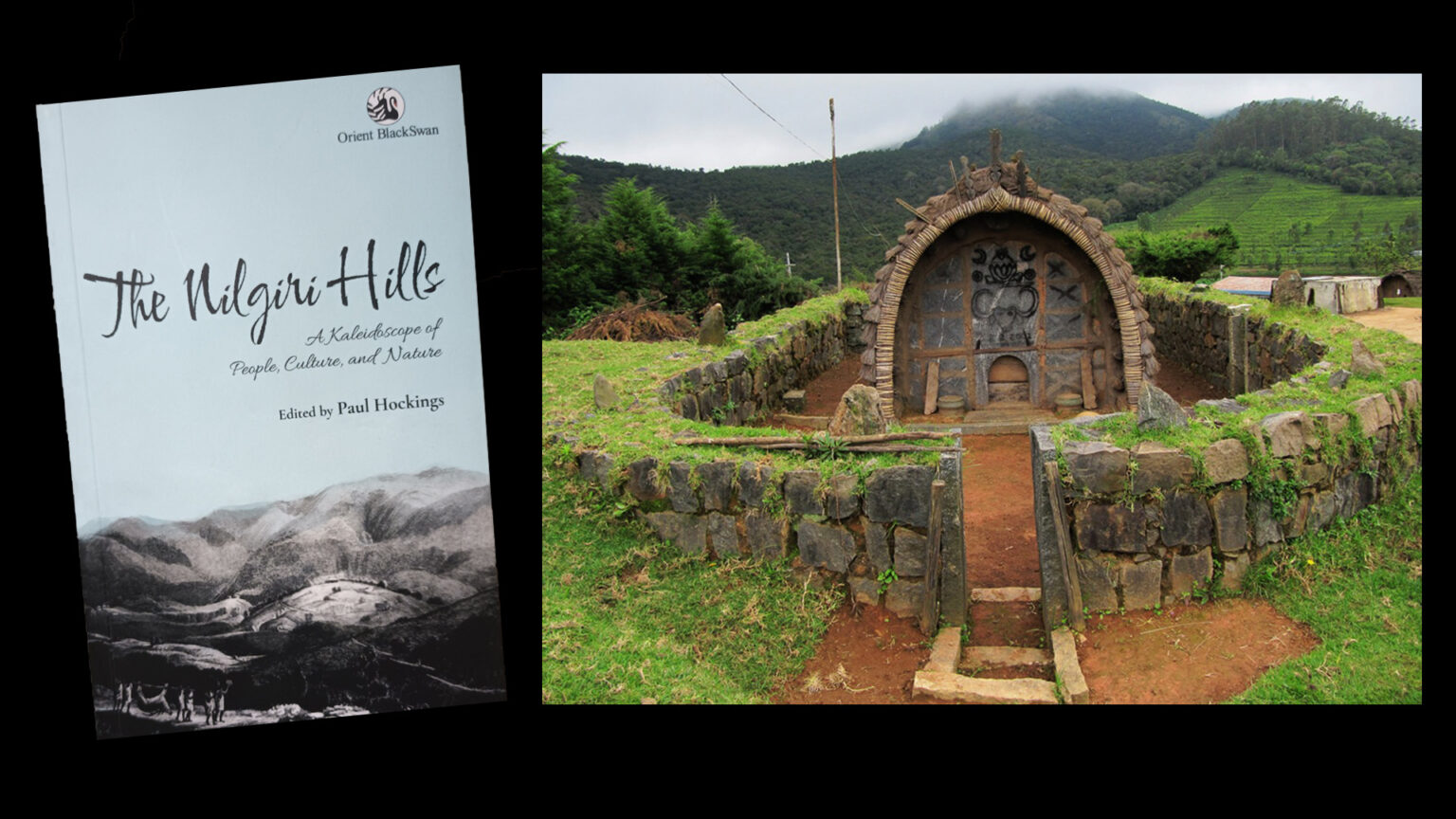
The Nilgiri Hills — A Kaleidoscope of People, Culture and Nature, edited by anthropologist Paul Hockings begins​ with what’s now a pressing concern in the landscape, its changing nature. So much so, a three-day conference was held in August in Ooty, titled Nilgiriscapes, bringing stakeholders and researchers together to discuss multiple challenges the hill district is facing including climate change, urbanisation and biodiversity loss.

The year 1819 was a year of transformation for the Nilgiris, with a British official John Sullivan arriving there and deciding to stay on for its breathtaking rolling grasslands, the English weather and the hospitality of the local people. He is credited with transforming a portion of the Nilgiris into the thriving Ooty town that we know today. He did that by initiating the British idea of modernisation such as infrastructure development in the form of roads, lakes and a marketplace, a cash economy, schools for modern education, courts, hospitals, churches and agricultural innovations that subsequently, completely altered the face of the land. As someone who is uncomfortable with attributing the “discovery” of indigenous lands to foreigners, the idea of Sullivan “founding” Ooty or “Sullivan’s Ooty” never sounded like the truest representation of the history of this magical hill town.

Hocking’s book, a compendium of modern, post-colonial thoughts on the landscape by a variety of writers and scholars including ecologists, filmmakers, musicologists, local writers as well as overseas experts, however, provides enough objectivity and agency to the real custodians of the land — the indigenous communities.

Homage to the transformation of the Nilgiris

The year 2019 marked the bicentenary of this transformation. The 264-page book has been put together as a homage to the Nilgiris district that, despite being so diminutive at just 1000 square kilometres, has its special place in South India. The Nilgiris or the Blue Mountains is one of the oldest mountain ranges, located at the tri-junction of Tamil Nadu, Kerala, and Karnataka states. The first UNESCO-declared biosphere reserve in India, the mountain range in the Western Ghats is a crucial habitat for native biodiversity and is home to many indigenous communities including Tamil Nadu’s six particularly vulnerable tribal groups. The Nilgiris is one of the better researched and documented part of India with voluminous literature available on every aspect of the region. That notwithstanding, the book has some original essays and lesser-known stories.

Jeep tracks to Mullimunth Toda Village. Photo by Indianature SG/Flickr

Once the British had established themselves in the late 1800s, the tropical montane grasslands, or the sholas were deemed “wastelands” and were converted into “productive” agricultural lands. These changes deeply affected the indigenous communities, especially the pastoralist Todas, whose lives were integrated into the grassland ecosystem. In Toda scholar Tarun Chhabra’s Twenty-first Century Recollections of the British Raj, the many cultural clashes that the Todas had with the British are mentioned. For instance, the initiation of the now UNESCO-designated narrow-gauge Nilgiri Mountain Railway left the Toda community in the doldrums. “Just before the train reaches its final destination of Ootacamund, it passes along a hillside located directly above the dairy temple at the Küšu hamlet. Since the Toda females are not allowed to enter the hallowed area above this temple, the location of the railway tracks presented the community with a predicament, one that they finally resolved by declaring that henceforth, no Toda females were to ride on the train over this stretch of track,” Chhabra writes.

So, what do the Toda women do? If they were to commute by train, they get on or disembark at the Lovedale station (depending on the direction) before the Ooty station. The article also mentions instances of acquisition and submergence of Toda sacred lands due to the establishment of townships and the construction of the Pykara dam respectively. However, Chhabra writes that the colonisers met their match in the Todas who had nothing but condescension for the foreigners. A rather frosty relationship later thawed into mutual admiration for each other.

The other dominant community of the Badagas too had witnessed a similar predicament of cultural and economic upending with the arrival of the British. The book mentions instances where large tracts of Badaga lands were usurped by the British Raj for the plantations reducing the community to near penury.

A peek into indigenous anxiety

Though the book talks in length about the colonisers and the two dominant communities of the Badagas and the Todas, it also delves into the other tribal communities like the Kotas, the Irulas and the Kurumbas and their altering occupations and lives with time. A section of the book is dedicated to honey hunting as a livelihood activity of the Irulas and the Kurumbas. Ecologists Pratim Roy and Anita Varghese give us a glimpse of indigenous anxiety through honey hunter Rāsu who worries about the future of the traditional occupation as the younger generations show little interest in the delicate operation of climbing the steep cliffs and gathering honey from rock bees.

People from the Kurumba tribe with a doctor near Banagudi Shola. One of the tribal communities in the Nilgiris, the Kurumbas are engaged in honey hunting as their main occupation. Photo by S. Gopikrishna Warrier/Mongabay.

The elderly Rāsu also worries about the disconnect his people have from the ancestral land and trees. The anxiety is palpable as he says, “The jackfruit trees gave us fruit and so we ate some and took the rest to the market. Today, a vehicle comes down and all the fruit is gathered at one time and sold off, and now they are talking about selling the trees. If the tree that my grandfather planted has to be cut down, then I don’t feel like I belong here.”

Anthropologist Maria-Claude Mahias’s essay titled Among the gems from the Nilgiris, the Kota women potters, talks about the exceptional bodily intelligence and skill of Kota women which is evident from the dexterity with which they do a true “throwing” of the lump of clay on the wheel-head using kinetic energy. It’s an exceptional craft and one that is denied to women of other potter castes. The author rues the lack of recognition the Kota women potters get and the need to give them their rightful place in the history of ceramics and technology.

Harking back to the British Raj

One cannot miss the deftness of Hockings’s writing as he pieces together reasons for British administrator Sir Frederick Price’s omission of the noteworthy Victorian architect R.F. Chisholm from his famous and elegant-looking book, Ootacamund, A History based completely on probabilities. In his The sadist who sired a South-Indian administrator, Hockings indulges us in hypothetical scenarios that may have led Price to cold-shoulder Chisolm and his contributions in his book, thereby taking the readers through the dubious past of Price, his father’s impossible cruelties on the convicts of the penal establishment in Norfolk island as the Commander and his probable gay liaisons and sodomy charges. This story, not any less than a Hollywood potboiler, may not be fitting well with the book’s larger theme but it is entertaining nonetheless and contains nuggets of history we may not have known otherwise.

Cover of the book, The Nilgiri Hills (l). Mullimunth Toda temple in the Nilgiris (r). Photo by Indianature SG/Flickr.

Author and social activist Indu K. Mallah’s The symbiosis in the Nilgiris sets the tone and tenor of the book and should’ve ideally been the opening essay. She shares multiple scenarios and stories that bring together the symbiotic relationship between the various indigenous communities in the Nilgiris as well as their links with nature without giving the readers false hopes that the Nilgiris is a paradise on earth. She asks, “Is there a meeting point between legend and history? Is there a meeting point between conservation and development? And is there indeed a meeting point between exploitation and expiration?” I guess there aren’t any definite answers to these questions.

Like many historical narratives of the region, this book too holds a mirror to the past. While there’s much to learn from history, there is a need to ponder more on what the future holds for the Nilgiris. The region, which has lost so much to colonisation and mindless development post-independence, is already in the throes of another challenge, climate change. The book sticks to the familiar, leaving something to be desired.

Banner image: The Todas are the indigenous people of the Nilgiris. The barrel-shaped houses are typical designs of Toda homes. Photo by Indianature SG/Flickr.

Original Source: https://india.mongabay.com/2023/10/book-review-a-walk-down-the-nilgiri-hills/

kotas

The Kotas are the potters of the Nilgiris.  Their pottery is oxidized by dusting it with the husk of saamai while baking , to provide them immunity against poisonous stings.  The advent of aluminum in the twentieth century has thrown them out of a job, forcing them to work as landless labour in the tea and potato gardens.  Their traditional terracotta jewellery is now replaced by gold, forcing them into near – penury.

The C. P. Ramaswami Aiyar Foundation has, with the support of the Ministry of Tribal Affairs, Government of India, funded the Kotas to turn their pottery traditions into an art form, and recreate their intricately – worked terracotta necklaces.

A young terracotta artist from Chennai was recruited to help them upgrade their skills.

The C. P. R. Environmental  Education Centre has been working in the Nilgiris since 1989 to preserve its ecology, especially the forests and wildlife.  By buying a piece of pottery or jewellery, you will be providing a lawful income to the Kotas and contributing to the conservation of the tropical forests of the Nilgiris.